
5 Foods That May Be Worsening Your PMOS (PCOS) Symptoms
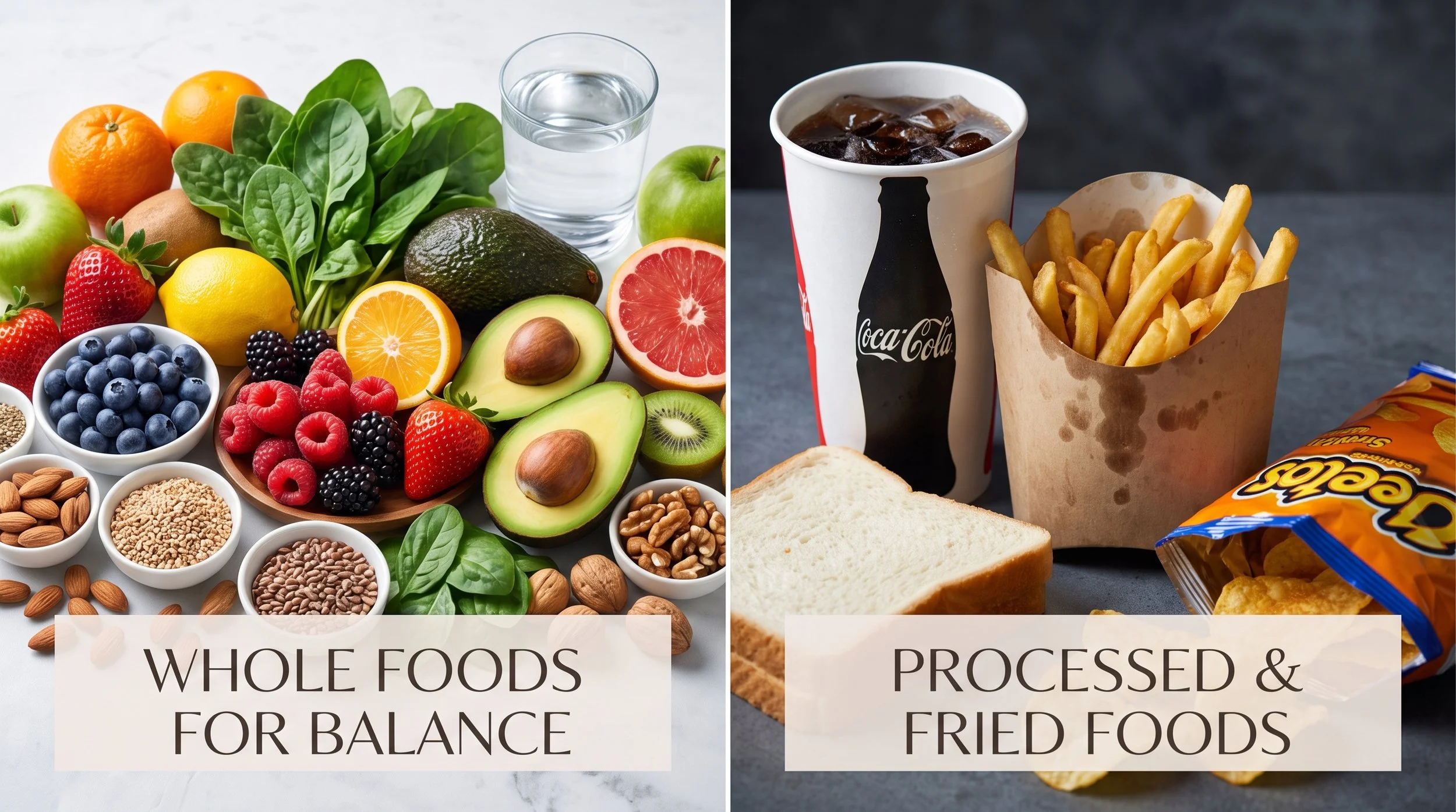
If you have PMOS (formerly known as PCOS), these five foods are the ones most likely making your symptoms worse. They're common, they're not always obvious, and they tend to show up more often than people realize — which is exactly why they're worth a closer look.
The 5 Foods to Limit
• Sugary drinks
• Desserts
• White bread
• Highly processed snacks or fast food
• Deep-fried foods
These foods can contribute to blood sugar spikes and inflammation, which may make symptoms like acne, weight gain, and irregular periods more difficult to manage for some people. A high-fat, high-sugar diet can cause fat particles to build up inside cells, interfering with insulin's ability to move sugar out of the bloodstream — one of the mechanisms behind insulin resistance in PMOS.[1]
Why This Matters for PMOS
Fried and highly processed foods are often high in Advanced Glycation End Products (AGEs) — compounds formed when food is cooked at high heat. In a 2025 randomized clinical trial, women with PMOS who followed a low-AGE diet for 12 weeks saw significantly greater improvements in fasting glucose than those on a standard diet, along with a significant drop in TNF-α, a marker of inflammation (p = 0.004), and improvements in testosterone and other hormone markers — beyond what calorie restriction alone produced.[2] In other words, what you eat may matter for PMOS symptoms independent of weight loss alone.
Consistency Over Perfection
Instead of trying to be perfect, just try to focus on eating whole foods most of the time. Your hormones don't need perfection — they need consistency. It's not that you can never eat these foods, but eating them often may make blood sugar harder to control.
This is exactly why nutrition is one piece of a personalized PMOS treatment plan at YSC Acupuncture — alongside acupuncture and GM Choi's Herbal Medicine™ — built around your individual pattern, not a one-size-fits-all diet.
Frequently Asked Questions
-
Sugary drinks, desserts, white bread, highly processed snacks or fast food, and deep-fried foods are among the foods most likely to worsen PMOS symptoms by contributing to blood sugar spikes and inflammation.
-
Sugary and high-glycemic foods cause blood sugar to spike, which can worsen insulin resistance — a common underlying factor in PMOS that's linked to symptoms like weight gain, acne, and irregular periods.
-
Yes. Fried and highly processed foods tend to be high in Advanced Glycation End Products (AGEs). A 2025 randomized clinical trial found that women with PMOS on a low-AGE diet had significantly better improvements in fasting glucose, inflammation, and hormone markers than those on a standard diet over 12 weeks.[2]
-
No. It's not that you can never eat sugary drinks, white bread, or fried foods — eating them often is what tends to make blood sugar harder to control. Consistency with whole foods most of the time matters more than perfection.
-
Focus on whole foods most of the time — foods that aren't highly processed and won't cause the same blood sugar spikes as sugary drinks, desserts, white bread, and fried foods. What that looks like day to day depends on your individual pattern, which is something we help you work through in a consultation.
-
Nutrition is one part of a personalized PMOS treatment plan that may also include acupuncture and GM Choi's Herbal Medicine™, built around your individual constitution and pattern rather than a generic diet plan.
This article is educational and reflects Traditional Korean Medicine principles as practiced at YSC Acupuncture. It is not a substitute for individualized medical or nutritional advice. Schedule a virtual herbal medicine consultation with YSC Acupuncture to discuss your symptoms and constitution directly.
Sources
1. “Polyendocrine Metabolic Ovarian Syndrome.” Physicians Committee for Responsible Medicine. pcrm.org/health-topics/polyendocrine-metabolic-ovarian-syndrome
2. Randomized clinical trial of a low-Advanced Glycation End Products diet in women with PCOS/PMOS. Reproductive Sciences 32, no. 4 (2025). link.springer.com/article/10.1007/s43032-025-01808-8