
Dang Gui Benefits: The Korean Herb Behind Women's Health
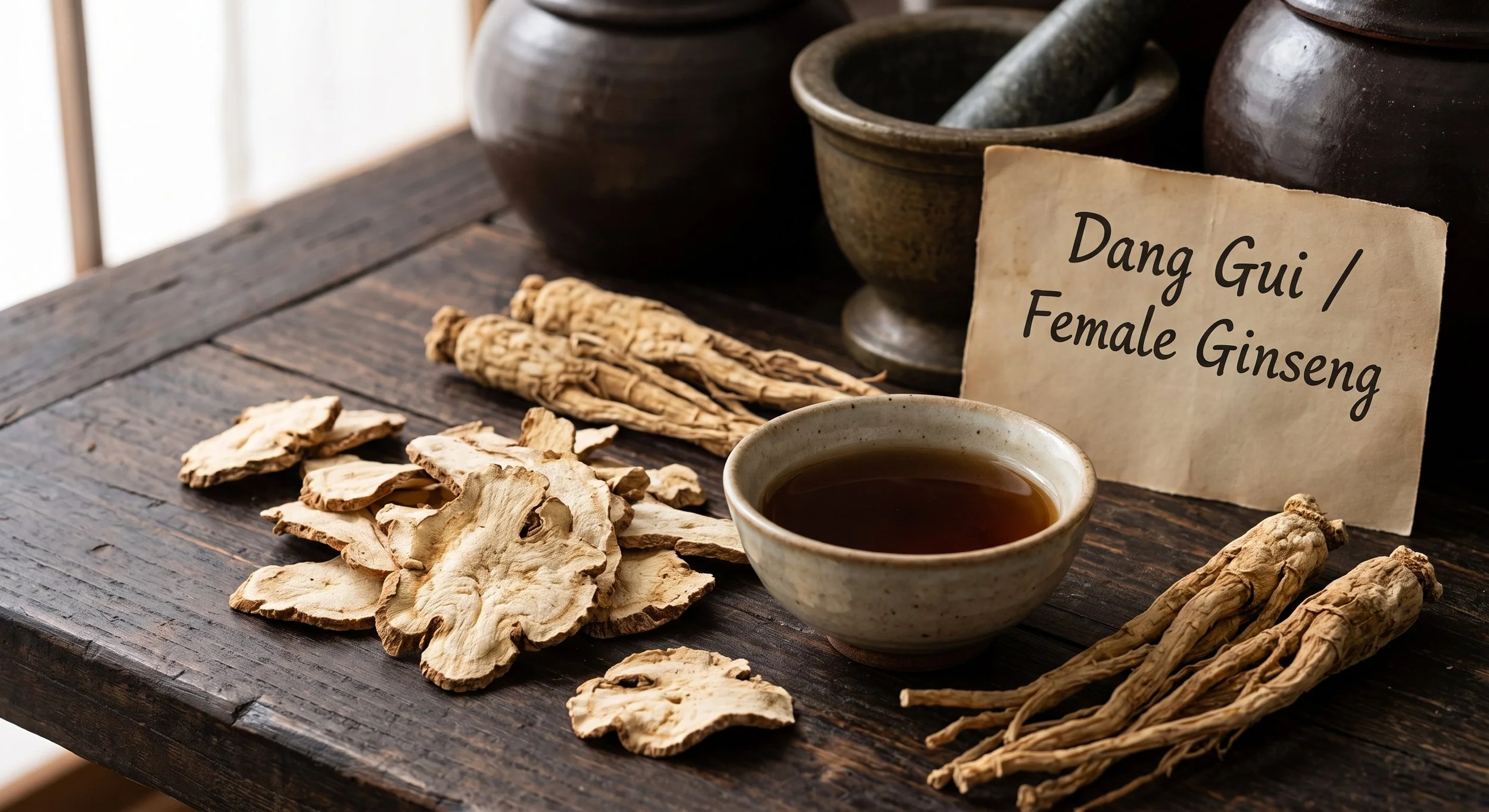
If you've been feeling unusually tired, dizzy, or noticing dry skin, a pale complexion, or periods that are light, irregular, or painful, Traditional Korean Medicine has a name for what your body may be signaling: blood deficiency, or poor blood circulation. And it has a herb that's been used for hundreds of years to help restore that balance — Dang Gui, sometimes called “female ginseng.”
What Is Dang Gui?
Dang Gui (also known as Dong Quai) is one of the most well-known herbs in Traditional Korean and Traditional Eastern Medicine, prized specifically for supporting women's health. It contains compounds with antioxidant and anti-inflammatory properties, which is part of why it's been so widely used for menstrual pain and other women's health concerns. A 2011 review in the journal Chinese Medicine identified more than 70 bioactive compounds in Dang Gui root — including ferulic acid and ligustilide — with documented anti-inflammatory, antioxidative, and anti-cardiovascular activity.[1]
Practitioners have relied on Dang Gui for generations, especially for patients showing signs of what Traditional Korean Medicine describes as blood deficiency or poor circulation. But the goal isn't simply to “add more blood.” In Traditional Korean Medicine, the aim is to nourish blood and help it move smoothly throughout the body — because blood that isn't flowing well can show up as symptoms just as often as blood that's depleted.
Signs of Blood Deficiency or Poor Circulation
In Traditional Korean Medicine, these symptoms are often connected to blood deficiency or circulation that isn't moving the way it should:
• Fatigue
• Dizziness
• Dry skin
• Pale complexion
• Light or irregular periods
• Menstrual cramps
If several of these sound familiar, it doesn't mean something is “wrong” with you — every body is unique, and these are simply signals worth paying attention to as part of your wellness journey.
Why We Don't Prescribe Dang Gui Alone
Here's something important to understand about how Dang Gui is actually used at YSC Acupuncture: we don't prescribe it — or any herb — by itself.
In our proprietary medicine, GM Choi's Herbal Medicine™, Dang Gui is combined with other herbs based on your individual pattern. Traditional Korean Medicine doesn't treat a symptom in isolation; it treats the whole body. Your constitution, your specific pattern, and how your blood, energy, and organs are working together all shape the formula — which is why the same herb can be part of very different combinations for two different people.
This is also why we caution against the idea of a single “miracle herb.” Dang Gui is powerful, but it works best as part of a personalized formula built around you, not as a one-size-fits-all fix. That pattern shows up in the research, too: in a 2023 randomized, placebo-controlled trial of Dingkun Pill — a traditional formula containing Angelica sinensis (Dang Gui) alongside several other herbs — women reported significantly greater reduction in menstrual pain than the placebo group, along with improved uterine blood flow.[2] A separate placebo-controlled trial of Si Wu Tang, another multi-herb formula built around Dang Gui, found a significant reduction in period pain after several menstrual cycles of consistent use.[3]
Finding the Root Cause
Fatigue, irregular cycles, and cramping are common — but common doesn't mean they should be ignored. These symptoms are often your body's way of pointing to an underlying pattern, and addressing that pattern, rather than just the symptom in front of you, is the difference between temporary relief and lasting balance.
That's the philosophy behind everything we do at YSC Acupuncture: prevention is the cure, and every body deserves care that's built around its own constitution — not a generic protocol.
Schedule a virtual herbal medicine consultation at YSCAcupuncture.com so we can get to the root cause of your symptoms.
Frequently Asked Questions
-
Dang Gui, also called female ginseng or Dong Quai, is a Traditional Korean Medicine herb traditionally used to support women's health — particularly fatigue, dizziness, pale complexion, dry skin, and light, irregular, or painful periods. It's valued for compounds with antioxidant and anti-inflammatory properties that support menstrual and overall wellness.
-
Yes. Dang Gui and Dong Quai refer to the same herb, sometimes also called “female ginseng.” The names reflect different regional and language traditions, but they describe the same root used across East Asian herbal medicine.
-
Dang Gui has traditionally been used to help ease menstrual cramps and other period-related symptoms, largely by supporting healthy blood flow and reducing inflammation. In Traditional Korean Medicine, it's typically combined with other herbs tailored to your specific pattern rather than used on its own. This lines up with clinical research: multi-herb formulas built around Dang Gui have shown significantly greater menstrual pain relief than placebo in randomized trials.[2][3]
-
Yes — Dang Gui isn't right for everyone, which is another reason it shouldn't be taken on its own without guidance. It may increase sun sensitivity, can affect blood clotting (which matters if you're on blood thinners or scheduled for surgery), and isn't recommended during pregnancy or breastfeeding.[4] This is exactly the kind of detail we review during a consultation, so your formula is built around your full health picture, not just your symptoms.
-
Blood deficiency is a Traditional Korean Medicine pattern associated with symptoms like fatigue, dizziness, pale complexion, dry skin, and light or irregular periods. It doesn't necessarily mean there's too little blood — it can also reflect blood that isn't circulating and nourishing the body efficiently.
-
At YSC Acupuncture, we don't prescribe Dang Gui — or any single herb — in isolation. GM Choi's Herbal Medicine™ combines it with other herbs based on your individual constitution, because Traditional Korean Medicine treats the whole body rather than one symptom at a time. A consultation is the best way to find out what formula is right for you.
-
The best way to know is a consultation with a practitioner who can assess your individual pattern. Schedule a virtual herbal medicine consultation at YSCAcupuncture.com so we can get to the root cause of your symptoms.
This article is educational and reflects Traditional Korean Medicine principles as practiced at YSC Acupuncture. It is not a substitute for individualized medical advice. Schedule a virtual herbal medicine consultation with YSC Acupuncture to discuss your symptoms and constitution directly.
Sources
1. Wei, W.-L., et al. “Bioactivities of major constituents isolated from Angelica sinensis (Danggui).” Chinese Medicine 6, no. 29 (2011). link.springer.com/doi/10.1186/1749-8546-6-29
2. Randomized, double-blind, placebo-controlled trial of Dingkun Pill (containing Angelica sinensis) for primary dysmenorrhea. Clinical and Experimental Obstetrics & Gynecology 50, no. 5 (2023). imrpress.com/journal/CEOG/50/5/10.31083/j.ceog5005107
3. Yeh, M.-L., Liu, C.-F., Huang, C.-L., Huang, T.-C. “Effects of Chinese herbal medicine (Si Wu Tang, containing Dang Gui) on dysmenorrhea.” PLOS ONE (2007). journals.plos.org/plosone/article?id=10.1371/journal.pone.0000719
4. “Dong Quai.” University of Rochester Medical Center Health Encyclopedia. urmc.rochester.edu/encyclopedia