
Mapping Your Body to the Seasons: Traditional Korean Medicine Guide
In Traditional Korean Medicine, health isn't a static state—it's a dynamic dance with the world around us. A core pillar of this practice is the belief that we must live by and follow the seasons to truly nurture our bodies through movement and food. Just as nature moves through distinct seasons, our bodies move through internal cycles that mirror the environment.
The Seasonal Map of the Body
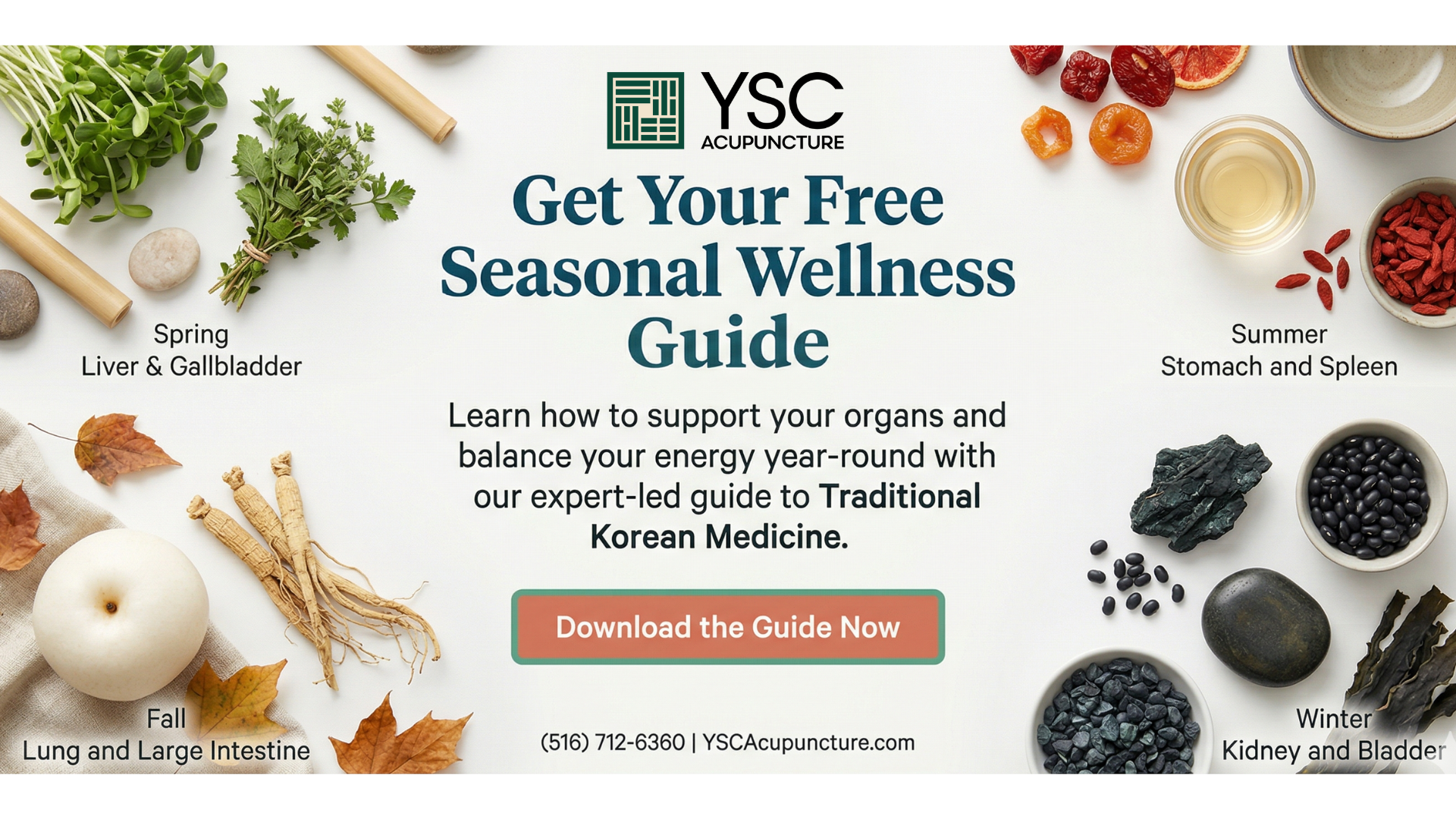
To understand how to care for yourself throughout the year, Traditional Korean Medicine "maps" the body to nature by associating each season with a specific organ system. When we align our lifestyle with these associations, we support the organs when they are most active or vulnerable.
Summer: The Stomach and Spleen
As the heat rises, the body’s focus shifts to the stomach and spleen. This season is about transformation and transportation—ensuring the food we eat is efficiently turned into the energy we need to stay active in the sun.
Fall: The Lung and Large Intestine
When the air turns crisp and dry, we look to the lung and large intestine. Fall is a time of "letting go" and protection. It is essential to support the lungs to maintain respiratory health and the large intestine to ensure the body can effectively eliminate what it no longer needs.
Winter: The Kidney and Bladder
Winter is the season of deep rest and conservation, tied to the kidney and bladder. In traditional medicine, the kidneys are seen as the reservoir of our essential energy. This is the time to move slower, eat warming foods, and protect your core vitality.
Spring: The Liver and Gall Bladder
As nature begins to bloom, our internal focus turns to the liver and gall bladder. Spring is associated with the smooth flow of energy (Ki) and new beginnings. Supporting the liver during this time helps clear out the stagnation of winter and prepares the body for a year of growth.
Watch: Living in Harmony with Nature
In this video, Young Choi, L.Ac explains the philosophy behind this seasonal mapping and why treating the body as a reflection of the natural world is the key to long-term vitality.
Get Your Free Seasonal Guide
Understanding the cycles of nature is the first step toward a more balanced life. Whether it's adjusting your movement or fine-tuning your nutrition, small changes made at the right time of year can have a massive impact on how you feel.
FAQ: Living Seasonally with Traditional Korean Medicine
-
A: In Traditional Korean Medicine, we believe that different organ systems become more active or vulnerable during specific times of the year. Mapping involves associating each season with an organ—like the Liver in Spring—to help us adjust our diet, movement, and lifestyle to stay in balance with nature.
-
A: According to the Traditional Korean Medicine guide:
Spring: Liver and Gall Bladder (Growth and Flow)
Summer: Stomach and Spleen (Transformation and Energy)
Fall: Lung and Large Intestine (Letting Go and Protection)
Winter: Kidney and Bladder (Rest and Conservation)
-
A: Spring is a season of new beginnings and rising energy. The Liver is responsible for the smooth flow of Ki (life force) throughout the body. Supporting the Liver in Spring helps clear out winter stagnation and prepares your system for a year of growth.
-
A: Winter is the season of the Kidney and Bladder, focusing on deep rest. To support your core vitality, you should move slower, prioritize warming foods, and focus on conserving your "essential energy" or reservoir of strength.
-
A: Yes. Aligning your acupuncture treatments with the seasons helps support the specific organ systems when they need it most. For example, focusing on the Lungs in the Fall can help maintain respiratory health as the air turns crisp and dry.