
Beef Bone Broth: Health Benefits, the Best Bones to Use, and YSC's Family Recipe
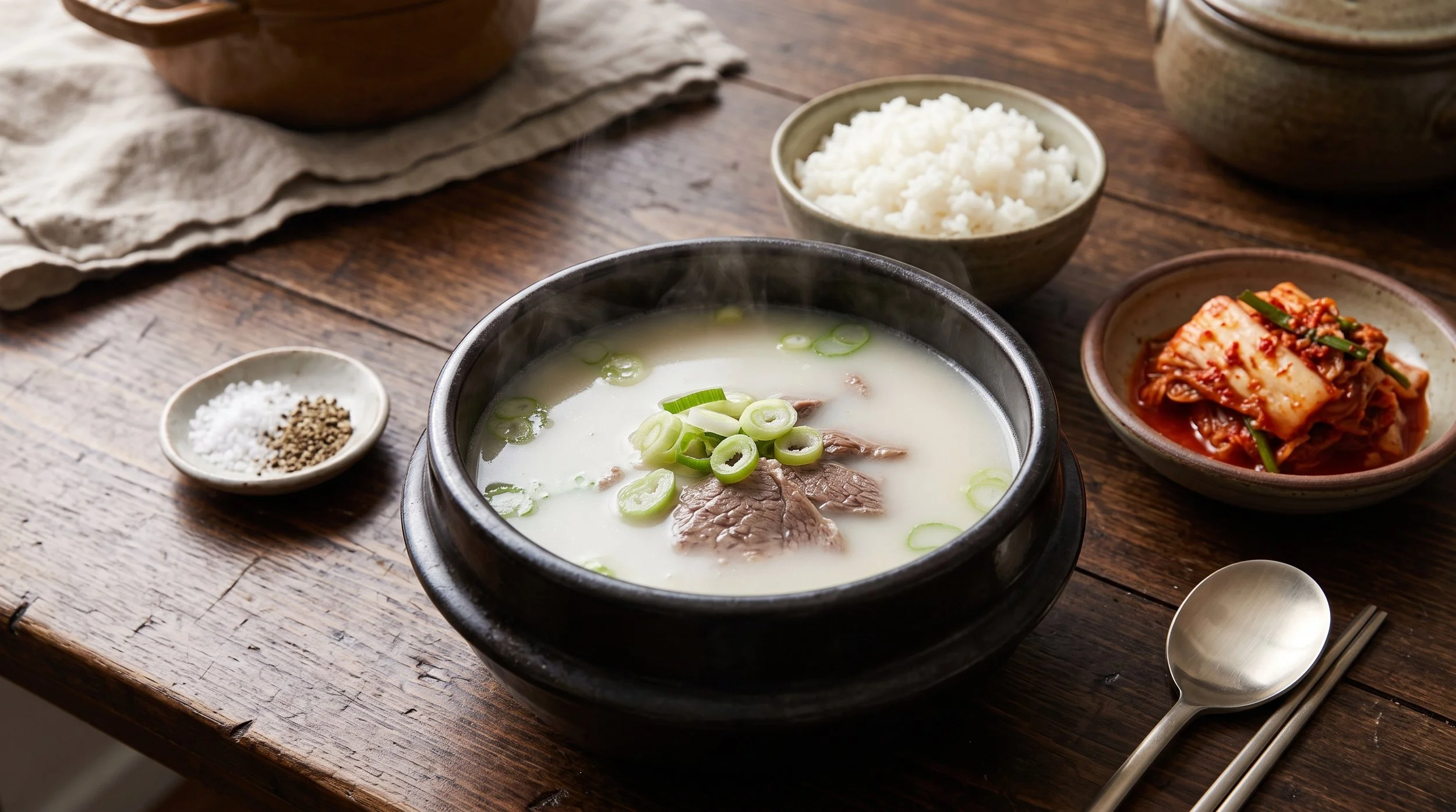
With cold and flu season approaching, beef bone broth is the one recipe to keep on repeat. In Traditional Korean Medicine, this rich, slow-cooked broth is considered warming and deeply nourishing — it builds what we call Qi and blood. That's why it's the go-to food after childbirth, surgery, or illness, and through the coldest months of winter.
Below, Young Choi, LAc, shares why bone broth matters in Korean medicine, which bones to choose, and the family recipe she and Grandmaster Choi have made for years.
Why Korean Medicine Turns to Bone Broth in Cold Season
In Traditional Korean Medicine, foods are understood by their nature as well as their nutrients. A milky, long-simmered beef broth is warming and building: it replenishes Qi (your body's energy) and blood, the reserves that get depleted by cold weather, illness, blood loss, or recovery from surgery. When those reserves run low, people often feel cold, tired, and slow to bounce back.
That's why Korean families serve bone broth to new mothers alongside miyeok-guk (seaweed soup), to anyone recovering from illness or surgery, and to the whole household as winter sets in. It's prevention in a bowl: nourishing the body before it's run down.
What Bone Broth Offers
Warmth and hydration: A hot, savory broth is easy to drink when your appetite is low — one reason it's a classic food for recovery and for cold, flu, and winter months.
Protein and gelatin: Long simmering draws gelatin and amino acids like glycine and proline out of bones and connective tissue — the source of that rich, silky texture.
Minerals: Bones and marrow contribute minerals to the broth, and pairing it with rice and vegetables makes a balanced meal.
Easy digestion: Broth is gentle on the stomach, which is why it's a common first food after illness or surgery.
Note: A 2019 study that measured the collagen-building amino acids in bone broth found they vary widely from batch to batch and recipe to recipe, and concluded that bone broth isn't a consistently reliable source of them compared with collagen supplements used in research.[1] In other words, bone broth's value is as a warming, nourishing whole food, not as a precise collagen dose. That's exactly how Korean medicine has always used it.
Choosing Your Bones
For beef bone broth, any of these are great choices:
Knuckle bones: Rich in cartilage and connective tissue, for a full-bodied, gelatin-rich broth.
Leg bones: Full of marrow, giving the broth its deep flavor and classic milky color.
Ox feet: Especially high in gelatin, for a thick, silky broth.
Oxtail: Meaty and flavorful. If you need a faster broth, frozen oxtail cooks down more quickly than large bones.
You'll find all of these at Korean grocery stores like H Mart, often labeled for soup (sagol).
YSC Acupuncture's Healing Bone Broth Recipe
This recipe, passed down and perfected by the Choi family, is easy to prepare and yields a broth rich in flavor and nourishment.
Ingredients
Beef bones (soaked in water for 10 hours to remove impurities)
10 cloves of garlic
2 slices of fresh ginger
Stewed beef chunk
Salt and pepper (added to taste)
Instructions
1. Prep the Bones: Soak the beef bones in water for 10 hours to remove the blood and impurities. Rinse and clean the bones before adding to a pot. This step is crucial for achieving a clean, rich broth.
2. Start the Broth: In a large pot with fresh water, add the garlic and ginger to the bones and bring the mixture to a boil.
3. Simmer and Soften: Reduce the heat to medium and let the broth simmer for 40 minutes before lowering it further to let it cook for 2 more hours.
4. Add the Stewed Beef: Include a chunk of stewed beef, boil briefly, then reduce to a simmer for another hour.
5. Skim the Fat: Carefully remove any fat floating on the surface.
6. Check the Color: The soup should achieve a milky white color, a sign of a rich, well-made broth.
7. Season to Taste: Add salt and pepper when serving for a customized flavor profile.
8. Enjoy! It's recommended to have the bone broth as part of a meal with rice and kimchi.
Garlic and ginger aren't just for flavor. Both are warming in Korean medicine and round out the broth beautifully. The result is a balanced, deeply satisfying meal that nourishes both body and spirit.
Making Bone Broth Part of Your Wellness Journey
Whether you're a busy professional heading into winter, a new mother recovering after birth, or someone bouncing back from illness, a weekly pot of bone broth is a simple, powerful habit. And if you're often cold, run down, or slow to recover, those signs may point to a deeper pattern of Qi or blood deficiency. At YSC Acupuncture, we look for the root cause and support your recovery with acupuncture and GM Choi's Herbal Medicine, tailored to your constitution.
Frequently Asked Questions
-
Beef bone broth is warming, hydrating, and easy to digest, and it provides protein, gelatin, and minerals. In Traditional Korean Medicine, it's considered deeply nourishing because it builds Qi and blood, which is why it's eaten after childbirth, surgery, or illness and during the coldest months.
-
Knuckle bones, leg bones, ox feet, and oxtail are all great choices. Knuckles and ox feet add gelatin, leg bones add marrow and a milky color, and oxtail adds meaty flavor. Frozen oxtail makes a faster broth.
-
Bone broth is a traditional cold-season food because it's warming, hydrating, and easy to eat when your appetite is low. In Korean medicine, it's used to replenish the body's reserves through winter and during recovery from illness.
-
Bone broth contains gelatin and collagen-related amino acids, but amounts vary widely between recipes and batches. A 2019 study found it isn't a consistently reliable source compared with collagen supplements, so it's best enjoyed as a nourishing whole food rather than a measured collagen dose.[1]
-
Long, steady simmering breaks down marrow, fat, and connective tissue from the bones, which emulsifies into the water and turns the broth milky white. Soaking the bones first removes blood and impurities so the broth stays clean.
-
Yes. In Korean tradition, bone broth is one of the main foods for postpartum recovery, often served alongside miyeok-guk (seaweed soup), because it's warming, nourishing, and easy to digest.
This article is educational and reflects Traditional Korean Medicine principles as practiced at YSC Acupuncture. It is not a substitute for individualized medical advice. Schedule a virtual consultation with YSC Acupuncture to discuss your health and constitution directly.
Schedule a virtual herbal medicine consultation at YSCAcupuncture.com so we can get to the root cause of your fatigue, cold sensitivity, or slow recovery.
Sources
1. Alcock, R. D., Shaw, G. C., Burke, L. M. “Bone broth unlikely to provide reliable concentrations of collagen precursors compared with supplemental sources of collagen used in collagen research.” International Journal of Sport Nutrition and Exercise Metabolism 29, no. 3 (2019): 265–272. doi.org/10.1123/ijsnem.2018-0139